
30-Second Summary
- Restring your racquet as many times per year as you play per week, and do not wait for strings to break before replacing them.
- Fresh strings improve control, spin, comfort, and shot consistency far more than most players realize.
- String type and tension directly affect not only performance, but also restringing frequency and long-term costs.
- Portable electronic stringing machines now allow serious players to maintain consistent setups without relying on expensive or inconsistent shop stringing.
Most players obsess over racquet frames, balance points, and swing weight while ignoring the one part of the racquet that actually touches the ball: the strings.
That mistake costs players control, consistency, and confidence.
Rubin Statham, ATP professional, former #1 New Zealand Davis Cup player, and founder of Pro Stringer, built the company after experiencing the same problem many serious competitors face. During one year on tour, he and his twin brother spent more than $17,000 on restringing labor while still dealing with inconsistent string jobs from different machines and technicians.
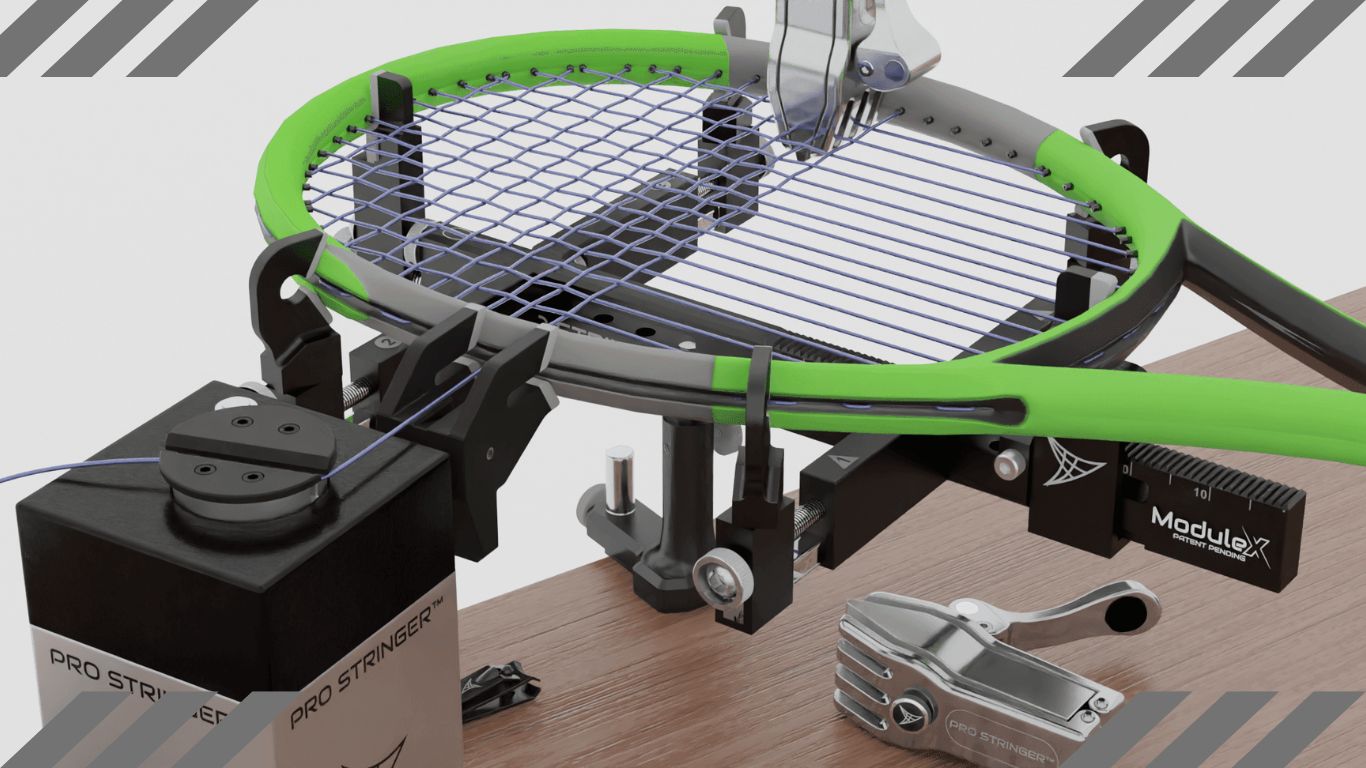
That frustration led to the creation of Pro Stringer: the world’s first truly portable electronic stringing machine designed to give players professional-level accuracy anywhere.
If you play competitively, travel frequently, or simply care about consistent performance, understanding how to restring racquet setups properly is not optional. Fresh strings directly affect spin, control, feel, comfort, and shot execution.
This guide breaks down everything serious players need to know about restringing rackets, including string tension, string durability, restring frequency, common mistakes, and the real cost to restring racquet setups over time.
Why Tennis Players Restring So Frequently
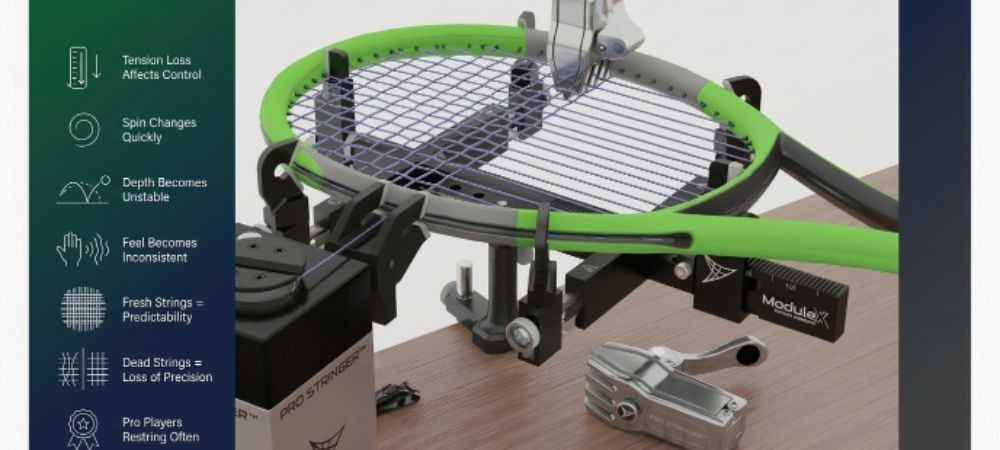
At the professional level, players are extremely sensitive to tension loss.
Even a small drop in tension changes:
- Launch angle
- Spin production
- Shot depth
- Feel at contact
- Timing consistency
That is why ATP and WTA professionals often restring before every match or even multiple times during tournaments.
Fresh strings provide:
- Better control
- More predictable ball response
- Improved spin potential
- Greater comfort
- Cleaner feel at impact
- More consistent shot placement
Dead strings create the opposite experience:
- Inconsistent depth
- Reduced spin
- Harsh vibrations
- Poor tension stability
- Loss of precision
This is exactly why elite players travel with multiple identically strung racquets.
How Often Should You Restring Your Tennis Racquet?
A common rule among players is:
Restring your racquet as many times per year as you play per week.
For example:
- Play twice weekly = restring twice yearly
- Play four times weekly = restring four times yearly
However, serious players usually restring much more often.
Competitive baseliners using polyester strings may restring every few weeks because polyester loses elasticity faster than softer string materials. By comparison, natural gut and multifilament strings generally maintain playability longer but come with higher upfront costs.
Players who train daily may restring weekly or before important tournaments.
Factors that affect restringing frequency include:
- Playing frequency
- String material
- Spin intensity
- Climate conditions
- Tension preference
- Skill level
Do I Need to Restring a New Tennis Racquet?
One of the most common beginner questions is: do I need to restring a new tennis racquet?
In many cases, yes.
Factory-installed strings are often generic and designed for mass production rather than performance. While they may be acceptable for casual beginners, serious players usually replace them quickly to achieve better control, comfort, and consistency.
Many competitive players immediately restring a new racquet with their preferred setup because they do not want unfamiliar tension or low-quality factory strings affecting their game.
If you recently bought a new racquet and it feels inconsistent or overly stiff, having the tennis racquet restrung with your preferred string and tension can make a dramatic difference.
Signs Your Racquet Needs Restringing
Many players wait until strings break.
That is usually far too late.
Performance often declines long before visible damage appears.
Loss of Control
Balls begin sailing long even when your technique feels correct.
Reduced Spin
The strings stop snapping back efficiently, reducing ball bite.
Harsh Feel
Dead strings often feel stiff and uncomfortable on impact.
Fraying or Notching
Visible wear where strings rub together indicates the setup is deteriorating.
Tension Loss
The string bed feels loose, inconsistent, or unpredictable.
Dull Sound
Fresh strings usually sound crisp. Dead strings often produce a muted response.
Understanding Tennis String Tension
String tension has a massive effect on performance.
Lower tensions generally provide:
- More power
- Greater comfort
- Larger sweet spot
Higher tensions generally provide:
- Better control
- Sharper response
- More precision
Most racquets recommend tensions between 45 and 65 pounds.
The ideal setup depends on:
- Swing speed
- Playing style
- Comfort preference
- Skill level
Heavy topspin players often prefer polyester strings at slightly lower tensions to maximize snapback and spin production.
Control-oriented players may increase tension for a more precise response.
How String Choice Affects Restringing Frequency and Cost
Different string materials do not just affect feel and performance. They also change how often players need to restring and how much they spend over time.
Polyester Strings
Polyester is popular among advanced players because of its control and spin potential, but it loses elasticity relatively quickly.
That means:
- More frequent restringing
- Faster tension loss
- Higher long-term maintenance frequency
Frequent competitors using polyester may restring every few weeks or even weekly during tournaments.
Multifilament Strings
Multifilament strings are softer and more comfortable, making them popular with intermediate players and players managing arm fatigue.
Compared to polyester, they often:
- Stay playable longer for recreational players
- Require less frequent restringing
- Wear out faster physically through fraying
Natural Gut
Natural gut offers exceptional tension maintenance and long-term playability.
Advantages include:
- Longer tension stability
- Excellent comfort
- Extended playable lifespan
However, natural gut is significantly more expensive upfront and requires protection from moisture and harsh weather.
Hybrid Setups
Many advanced players combine polyester mains with softer crosses to balance:
- Durability
- Comfort
- Spin
- Cost efficiency
Hybrid setups can also help reduce restringing frequency compared to full polyester installations while maintaining much of the desired control and spin response.
How Much Does It Cost to Restring a Tennis Racquet?
One of the most searched questions online is: how much does it cost to restring a tennis racquet?
The answer depends on the string type, labor rates, and how often you play.
| String Type | Typical Cost Per Restring | Annual Cost (Monthly Restringing) | Annual Cost (Quarterly Restringing) |
| Synthetic Gut | $15–$30 | $180–$360 | $60–$120 |
| Multifilament | $25–$45 | $300–$540 | $100–$180 |
| Polyester | $25–$50 | $300–$600 | $100–$200 |
| Natural Gut | $50–$75+ | $600–$900+ | $200–$300+ |
For serious players, the long-term cost becomes substantial.
A tournament player restringing multiple times per month can easily spend thousands annually on labor and strings alone.
This is one reason many competitive players eventually invest in their own stringing setup. Over time, eliminating repeated labor charges while maintaining consistent tension can produce significant savings.
DIY Stringing vs Professional Stringing
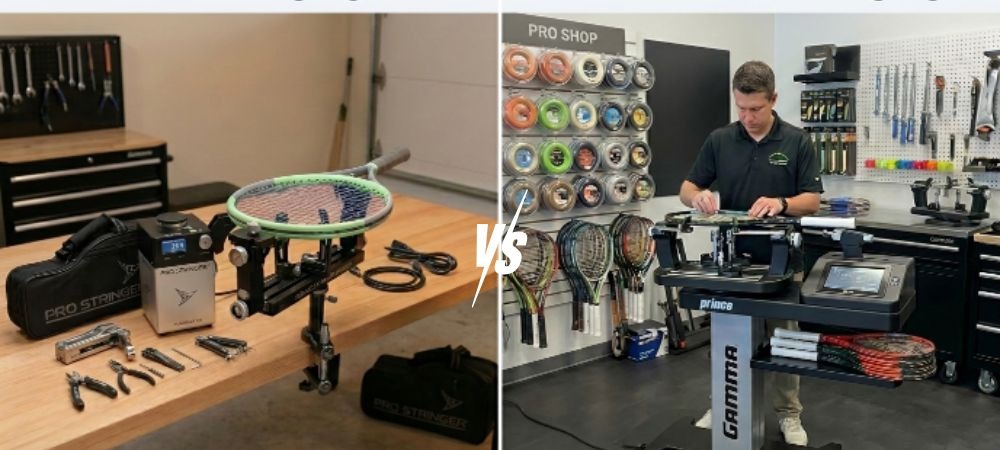
For years, professional stringing was the only realistic option because traditional machines were large, expensive, and difficult to transport.
Modern portable systems changed that.
Advantages of Professional Stringing
- Experienced technicians
- Fast turnaround
- Professionally calibrated machines
Advantages of DIY Stringing
- Long-term savings
- Total control over tension
- Consistent setups
- Convenience while traveling
- Ability to experiment with string combinations
The Pro Stringer CybeX was designed specifically for players who wanted professional-level tension accuracy without relying on bulky shop equipment.
The machine delivers highly precise electronic pulling while remaining portable enough for tournament travel.
That combination made it attractive not only to recreational competitors but also ATP and WTA professionals who needed consistency across tournaments.
The Equipment Needed for Restringing
Proper restringing requires precision.
Essential tools include:
- Stringing machine
- Clamps
- Cutting pliers
- Starting clamp
- Needle nose pliers
- Stringing awl
- String cutters
A quality starting clamp is especially important during difficult pulls or short string installations.
Similarly, a high-quality stringing awl helps guide blocked holes without damaging grommets or strings.
Professional-grade machines also improve consistency by maintaining accurate tension throughout the process.
Understanding Modern Stringing Machines
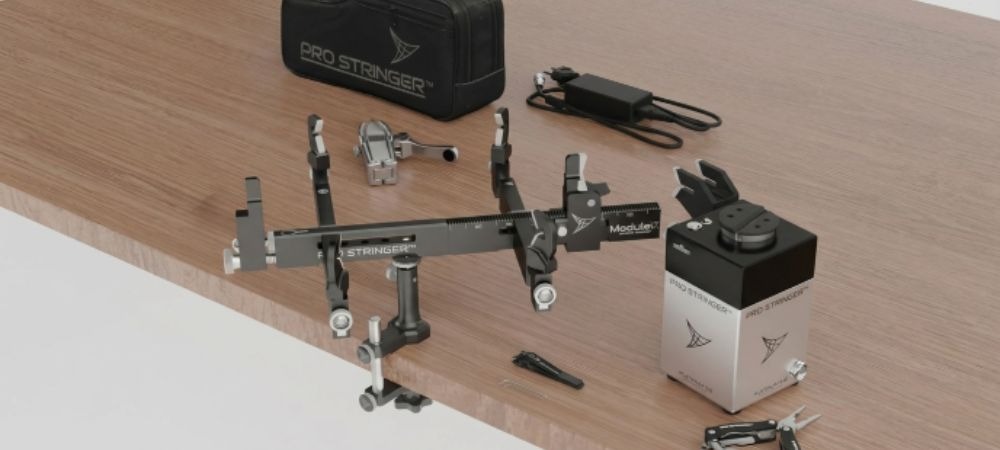
Not all machines perform equally. A high-quality racquet restringing machine helps players maintain accurate tension, improve consistency, and reduce the performance variations that often come from inconsistent shop string jobs.
There are three primary categories:
Drop Weight Machines
Affordable but slower and more manual.
Crank Lockout Machines
Popular in shops because of faster operation.
Electronic Constant Pull Machines
Preferred by many serious players because they maintain more accurate and consistent tension.
Portable electronic systems have become especially popular because they combine precision with mobility.
That portability matters for tournament players, traveling coaches, and high-frequency competitors.
Overview of the Tennis Racquet Restringing Process
Professional stringing is a highly precise process that requires both technical skill and consistent tension control. While the exact process varies by racquet pattern and string type, the general workflow typically includes:
Step 1: Removing Old Strings
Strings are cut carefully in a balanced pattern to avoid unnecessary stress on the racquet frame.
Step 2: Inspecting the Racquet
Stringers check the frame, grommets, and bumper guard for wear or damage before beginning installation.
Step 3: Mounting the Racquet
The racquet is secured onto the machine to ensure even support during tensioning.
Step 4: Installing Main Strings
The vertical main strings are tensioned first, usually starting from the center of the racquet and working outward evenly.
Step 5: Installing Cross Strings
Cross strings are woven horizontally through the mains while maintaining consistent tension and minimizing friction.
Step 6: Finishing Knots and Final Checks
Secure finishing knots help preserve tension stability. The completed racquet is then inspected for consistency, alignment, and overall string bed quality.
Because accurate stringing requires experience, precision tools, and consistent technique, many competitive players either work with trusted professional stringers or invest in high-quality electronic stringing systems for greater consistency.
Common Stringing Mistakes
Even experienced players make avoidable mistakes.
Pulling Incorrect Tension
Too high:
- Reduced comfort
- Smaller sweet spot
Too low:
- Reduced control
- Inconsistent depth
Rushing the Process
Fast stringing often creates:
- Tension inaccuracies
- String damage
- Inconsistent feel
Poor Clamp Technique
Improper clamping may:
- Crush strings
- Allow slipping
- Reduce durability
Ignoring Frame Stress
Uneven tensioning can distort the racquet shape.
Continuing to Use Dead Strings
Dead strings hurt performance far more than many players realize.
Why Serious Players Prioritize Consistency
The difference between amateur and professional equipment management is consistency.
Elite players do not guess.
They know:
- Exact tension preferences
- Preferred string combinations
- Restring frequency
- Environmental adjustments
Heat, humidity, and cold temperatures all affect string behavior.
High temperatures accelerate tension loss.
Cold conditions make strings stiffer.
Humidity especially impacts the natural gut.
How Portable Stringing Changed Modern Tennis
At professional tournaments, players often rely on dedicated tournament stringing teams working long hours behind the scenes. During major events, racquets may be restrung multiple times per day depending on match schedules, weather conditions, and player preferences.
For traveling players outside the biggest tournaments, however, access to consistent stringing quality is not always guaranteed. Different stringers, machine calibrations, and turnaround times can all affect performance consistency.
Traditional stringing machines were also:
- Heavy
- Expensive
- Difficult to transport
Portable electronic systems helped solve many of these problems by allowing players and coaches to maintain more consistent setups while traveling.
Players can now:
- Restring during tournaments
- Maintain identical tensions across events
- Reduce dependence on local shop availability
- Lower long-term labor expenses
This shift is one reason portable electronic systems gained popularity among competitive players, traveling coaches, and serious junior athletes who value consistency from one event to the next.
The Real Relationship Between Strings and Performance
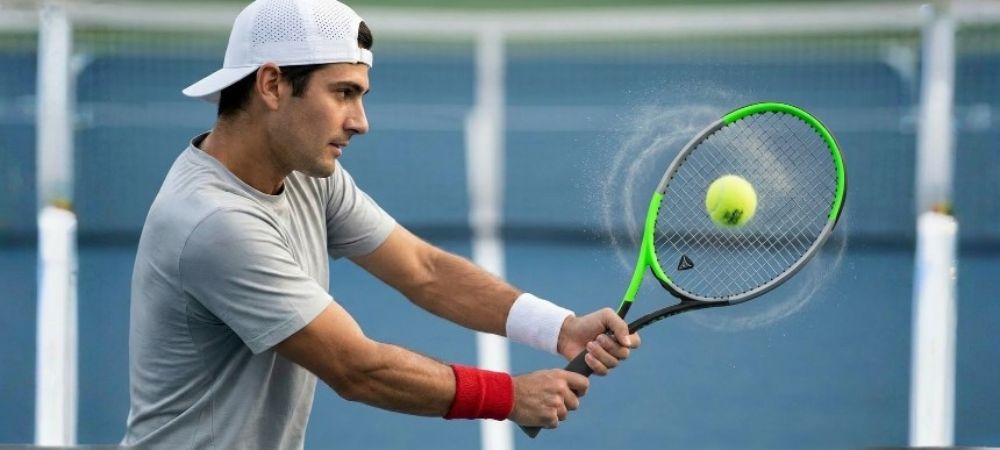
Most racquet marketing focuses on frames.
Experienced players know strings matter more.
Strings determine:
- Ball pocketing
- Launch angle
- Spin production
- Comfort
- Feel
- Shot consistency
A premium racquet paired with dead strings will still perform poorly.
In many cases, freshly restrung strings improve performance more noticeably than switching racquets entirely.
Final Thoughts
Serious tennis players do not leave string performance to chance.
Fresh strings directly influence control, spin, comfort, confidence, and consistency. Understanding tension, string durability, restring frequency, and proper installation gives players a measurable competitive advantage.
Modern portable electronic stringing technology has also changed how players manage their equipment. Instead of relying entirely on inconsistent shop string jobs or paying repeated labor fees, players now have more control over tension accuracy and long-term consistency.
Tired of paying repeated shop fees and dealing with inconsistent string jobs? Pro Stringer was built by ATP professional Rubin Statham to solve that exact problem. Take full control of your tension, your setup, and your performance wherever you play. Explore Pro Stringer’s portable electronic stringing machines and accessories at Pro Stringer.
FAQs
1. How much does it cost to restring a tennis racquet?
Professional restringing usually costs between $15 and $75+, depending on the string type, labor rates, and location. Natural gut setups are typically the most expensive.
2. Do I need to restring a new tennis racquet?
Many serious players replace factory-installed strings immediately because stock strings are often generic and inconsistent. Restringing allows players to customize tension, feel, and performance.
3. How often should I restring my racquet?
A common guideline is restringing as many times yearly as you play weekly. Competitive players often restring far more frequently to maintain consistent performance.
4. Is it cheaper to restring your own racquet?
For frequent players, DIY stringing can save substantial money over time because it eliminates repeated labor costs while giving players complete control over tension and consistency.
5. What strings do professional players usually use?
Many professionals use polyester strings or hybrid setups because they provide strong control, spin potential, and durability for high-level competition.