
30-Second Summary
- Start in the middle of your racquet’s recommended tension range and adjust gradually by 2–3 lbs at a time until you find the balance of power, control, and comfort that matches your game.
- If your shots constantly fly long or feel unpredictable, slightly increase tension for more control. If your racquet feels stiff or lacks depth, lower tension slightly for easier power and comfort.
- Do not copy professional players’ tensions without considering your own swing speed, string type, and racquet setup because the same tension can perform very differently from player to player.
- Restring consistently because strings lose tension over time, especially polyester strings, and dead strings can reduce control, comfort, spin consistency, and overall confidence on court.
Every tennis player spends time choosing the right racquet, strings, and grip. Yet one factor often has the biggest impact on performance: tennis racquet string tension. The tension you choose can completely change how your racquet feels during a match. It affects power, control, spin, comfort, and even confidence on court.
Some players prefer tighter strings for precision and sharper ball placement. Others enjoy looser tensions for added power and comfort. There is no universal “perfect” setup because the ideal tension depends on your playing style, experience level, and personal preference.
Understanding string tension is essential if you want to improve consistency and maximize your equipment. Even professional players constantly adjust tension depending on weather conditions, court surfaces, and opponents. Once you understand how tension works, you can make smarter decisions and build a setup that truly supports your game.
Learning how to choose tennis strings properly involves balancing tension, string material, gauge, durability, comfort, and playing style together rather than focusing on only one factor.
What Is Tennis String Tension?
String tension refers to how tightly the strings are pulled during the stringing process. It is usually measured in pounds or kilograms. Most tennis racquets have a recommended tension range printed on the frame, often somewhere between 45 and 65 pounds.
Lower tension means the strings are looser. Higher tension means the strings are tighter.
While this sounds simple, the effects are significant. A difference of only two or three pounds can noticeably change how your racquet performs during rallies.
Lower tensions generally create:
- More power
- Greater comfort
- Larger sweet spot
- Better shock absorption
Higher tensions typically provide:
- More control
- Better precision
- Firmer feel
- Increased predictability
Choosing the right balance depends on what your game needs most.
Why String Tension Matters So Much
Many players underestimate the importance of tension. They focus heavily on racquet models and string brands while ignoring the setup that directly affects ball response.
String tension influences:
- Ball trajectory
- Shot depth
- Spin production
- Arm comfort
- Timing
- Touch shots
- Serve performance
A poorly chosen tension can make a great racquet feel uncomfortable or inconsistent. On the other hand, the correct tension can improve confidence almost immediately.
Players often describe the difference as feeling “connected” to the racquet. That connection comes from finding the tension that complements your mechanics and style.
Low String Tension: Benefits and Drawbacks
Advantages of Lower Tension
More Power
The ball stays on the strings slightly longer, allowing greater energy transfer. Players with slower swing speeds often benefit from this added assistance. For example, recreational players who struggle to hit deep shots from behind the baseline often notice immediate improvement after lowering tension slightly. Instead of forcing power through harder swings, the racquet begins generating easier depth naturally.
Increased Comfort
Lower tension reduces vibration and shock, making impact feel softer on the arm. This is especially important for players dealing with tennis elbow, shoulder fatigue, or wrist discomfort. Many players who switch to polyester strings lower tension specifically because tighter polyester setups can feel harsh during long practice sessions or tournament weekends.
Larger Sweet Spot
Loose strings create a more forgiving response on off-center contact. This can help newer players maintain rally consistency even when timing is imperfect. During fast exchanges or defensive stretches, slightly off-center shots still retain decent depth and control instead of dying short into the net.
Easier Depth
Players can generate deeper shots without swinging excessively hard. This becomes extremely useful during defensive rallies when players are pushed wide off the court and need enough depth to recover position. Lower tension can help players absorb pace and redirect the ball deep with less physical effort.
Disadvantages of Lower Tension
Less Precision
Some players struggle to control aggressive swings when tension becomes too low. Players who hit with heavy pace may notice shots sailing long during baseline rallies, especially when trying to flatten out forehands or attack shorter balls aggressively.
Reduced Predictability
Loose strings can sometimes produce a more unpredictable launch angle during fast rallies. Flat hitters who rely heavily on timing and clean ball striking often describe extremely low tensions as “too lively,” especially when trying to hit precise targets under pressure.
Faster String Movement
Strings tend to shift more frequently after heavy topspin shots. Players using softer multifilament strings may find themselves constantly straightening strings between points, particularly during long clay-court rallies with heavy spin exchanges. Over time, this movement can also affect consistency and feel.
High String Tension: Benefits and Drawbacks
Advantages of Higher Tension
Greater Control
Tighter strings reduce trampoline effect and improve directional accuracy. Advanced players with faster swing speeds often prefer this setup because they can swing aggressively without worrying about overhitting. This becomes particularly useful when attacking smaller targets near the sidelines.
Better Feedback
Players often feel more connected to the ball during impact because tighter strings produce a firmer response. This sharper feedback can improve confidence on touch volleys, slice backhands, and precision serves where feel and placement matter more than raw power. Net players especially tend to appreciate this cleaner response.
Cleaner Ball Placement
Aggressive players can swing confidently while maintaining precision. Competitive baseliners often choose tighter tensions because they trust the racquet to keep the ball inside the lines during high-speed rallies and pressure moments.
Consistent Response
Tighter strings usually produce a more stable and predictable feel across the string bed. Tournament players often value this consistency because it allows them to trust their timing and mechanics during long matches instead of constantly adjusting to unexpected ball responses.
Disadvantages of Higher Tension
Less Power
Players must generate more racquet head speed themselves to create depth and pace. Beginners and players with compact swings often struggle to hit penetrating shots at very high tensions because the string bed provides less free power.
Reduced Comfort
Higher tensions increase shock and stiffness at impact. When paired with firm polyester strings, overly tight setups can lead to arm fatigue or discomfort, particularly during long training sessions or back-to-back matches.
Smaller Sweet Spot
Off-center hits become less forgiving because the string bed feels firmer overall. Players may notice harsher vibration and weaker shot quality when defending wide balls or returning heavy serves outside the center of the racquet face.
How Playing Style Affects Ideal Tension
Every player interacts with the ball differently. This is why copying another player’s tension does not always work.
Baseline Players
Heavy topspin players often use medium-to-high tensions for control while relying on racquet speed to create spin.
Flat Hitters
Players who hit flatter shots may prefer slightly lower tensions to increase depth and comfort.
Serve-and-Volley Players
These players often seek balanced tensions that provide touch, feel, and quick response at the net.
Beginners
Newer players generally benefit from lower or mid-range tensions because they need easier power and forgiveness.
Advanced Competitors
Experienced players frequently customize tensions in small increments depending on match conditions.
The best approach is to experiment gradually instead of making dramatic changes all at once.
Common Tennis String Tension Myths
Higher Tension Always Means More Control
This is only partially true. While tighter strings can improve precision for advanced players, excessively high tensions may actually reduce control if the player cannot generate enough racquet head speed or struggles with comfort.
Copying a Professional Player’s Tension Will Improve Your Game
Professional setups are highly individualized. A touring professional may use extreme tensions alongside specific racquets, string types, swing mechanics, and physical conditioning that recreational players do not share. Simply copying a pro’s tension rarely produces the same results.
Lower Tension Eliminates Spin
Spin production depends heavily on swing speed, technique, and string type. Many modern players actually use lower polyester tensions because they can increase ball pocketing and snapback.
Strings Only Matter After They Break
Strings often lose performance long before breaking. Dead strings may feel stiff, inconsistent, or uncomfortable even if they appear visually intact.
The Relationship Between Strings and Tension
Not all strings react the same way at identical tensions. Material matters just as much as the number itself.
Tennis racquet string pattern also influences how tension performs. Open patterns such as 16×19 typically generate more spin and power, while denser patterns like 18×20 usually provide greater control and predictability.
Polyester Strings
Poly strings are firm and control-oriented. Most players string them at lower tensions to maintain comfort.
Multifilament Strings
These are softer and more powerful. Players often increase tension slightly for added control.
Natural Gut
Natural gut provides excellent feel and elasticity. It performs well across a wide tension range.
Hybrid Setups
Hybrid combinations allow players to balance control and comfort by combining different materials.
A polyester setup at 50 pounds can feel dramatically different from a multifilament setup at the same tension.
How Racquet Head Size Affects String Tension
Racquet head size also influences how tension feels during play.
Oversize racquets generally create more trampoline effect because of their larger string bed. Players using larger head sizes often increase tension slightly to improve control and maintain a firmer response.
Smaller head sizes, such as many 98 sq in performance racquets, naturally provide more control and a denser feel. Players using these racquets may sometimes lower tension slightly to add comfort, depth, or easier power.
This interaction explains why the same tension can feel completely different across two racquets with different head sizes. Tension should always be evaluated alongside racquet design rather than treated as an isolated number.
Weather and Environmental Conditions
Professional players constantly adjust tension based on climate and court speed.
Hot Weather
Heat softens strings and increases power. Players may raise tension slightly to maintain control.
Cold Weather
Cold temperatures stiffen strings and reduce power. Lower tensions can help compensate.
Humidity
Moisture affects string elasticity and durability, especially with natural gut.
Altitude
Balls travel faster at high altitude, so players often increase tension for better control.
Small adjustments based on conditions can significantly improve consistency.
How Tension Loss Changes Performance Over Time
Even perfectly chosen tension will not stay constant forever. All tennis strings gradually lose tension after stringing, but some materials lose tension much faster than others.
Polyester strings are especially known for rapid tension loss. In many cases, poly strings can lose a noticeable percentage of their tension within the first 24 hours after installation, even before hitting a ball. This is one reason why competitive players frequently restring despite strings not being broken.
As tension drops over time, players may notice:
- Shots launching deeper than expected
- Reduced control during aggressive swings
- Changes in spin response
- Inconsistent feel during rallies
- Less predictable serve placement
Multifilament and natural gut strings generally maintain tension better than polyester, although they still lose elasticity gradually through play and environmental exposure.
Understanding tension loss is important because many players assume their technique is failing when the real issue is an aging string bed. Consistent restringing helps maintain reliable performance and prevents sudden changes in racquet response during competition.
Finding Your Ideal String Tension
There is no shortcut to discovering your ideal setup. The process requires testing and observation.
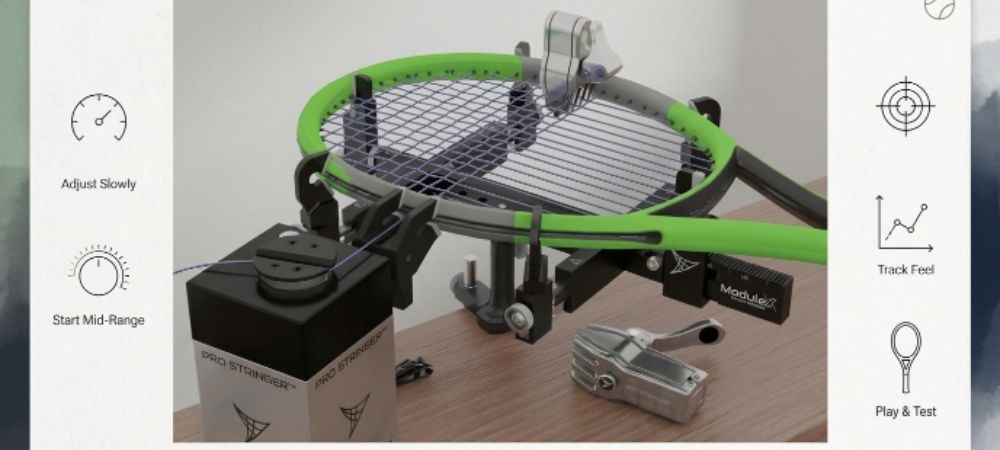
Start in the Middle
Begin within the middle of your racquet’s recommended range.
Change Gradually
Adjust by only 2–3 pounds at a time. Large jumps make it difficult to evaluate changes accurately.
Track Your Results
Pay attention to:
- Shot depth
- Comfort
- Spin
- Serve consistency
- Control under pressure
Give Yourself Time
Do not judge a setup after only a few minutes. Play several sessions before deciding.
The best tension is the one that helps you play confidently and consistently.
How Often Should You Restring?
Frequency depends on:
- Playing level
- String type
- Match intensity
- Playing frequency
A common guideline is:
Restring as many times per year as you play each week.
For example:
Playing twice weekly = restring at least twice yearly
Competitive players often restring far more frequently to maintain consistency.
Polyester strings especially lose tension quickly and may feel significantly different after extended use.
This is why tension consistency matters so much to serious players. Even small tension differences can noticeably change ball trajectory, depth, spin response, comfort, and overall confidence during matches. Many players become frustrated when two restringing jobs at different shops feel completely different despite requesting the same tension each time.
Over time, maintaining consistent tension becomes just as important as choosing the correct tension itself. This is one reason many competitive players eventually invest in their own stringing machine: owning the equipment allows them to control tension accuracy, stringing consistency, and racquet feel without depending on varying shop techniques, machines, or calibration standards.
How Much Does It Cost to String a Tennis Racquet?
As tension consistency affects nearly every aspect of performance, maintaining a fresh and accurately strung racquet becomes extremely important over time. As strings lose tension and playability, regular restringing becomes part of maintaining reliable ball response and confidence on court.
Players frequently ask how much to string a tennis racquet at a professional shop, especially once they realize how often serious players restring to maintain consistent tension and performance.
Typical restringing costs include:
- Labor: $15–$30
- Strings: $10–$50+
- Total average cost: $25–$80 per restring
Competitive players who restring frequently may spend hundreds or even thousands annually on stringing services. This often leads them to buy their stringing equipment. It allows them to maintain tension, accuracy, and consistency of choice, while saving the cost and time of getting it done from shops.
Why Competitive Players Monitor Tension Closely
At higher levels, even small changes become noticeable.
Competitive players monitor:
- Tension loss
- Weather conditions
- Match surfaces
- Ball types
- Opponent pace
Professional athletes often restring racquets daily because consistency matters enormously during competition.
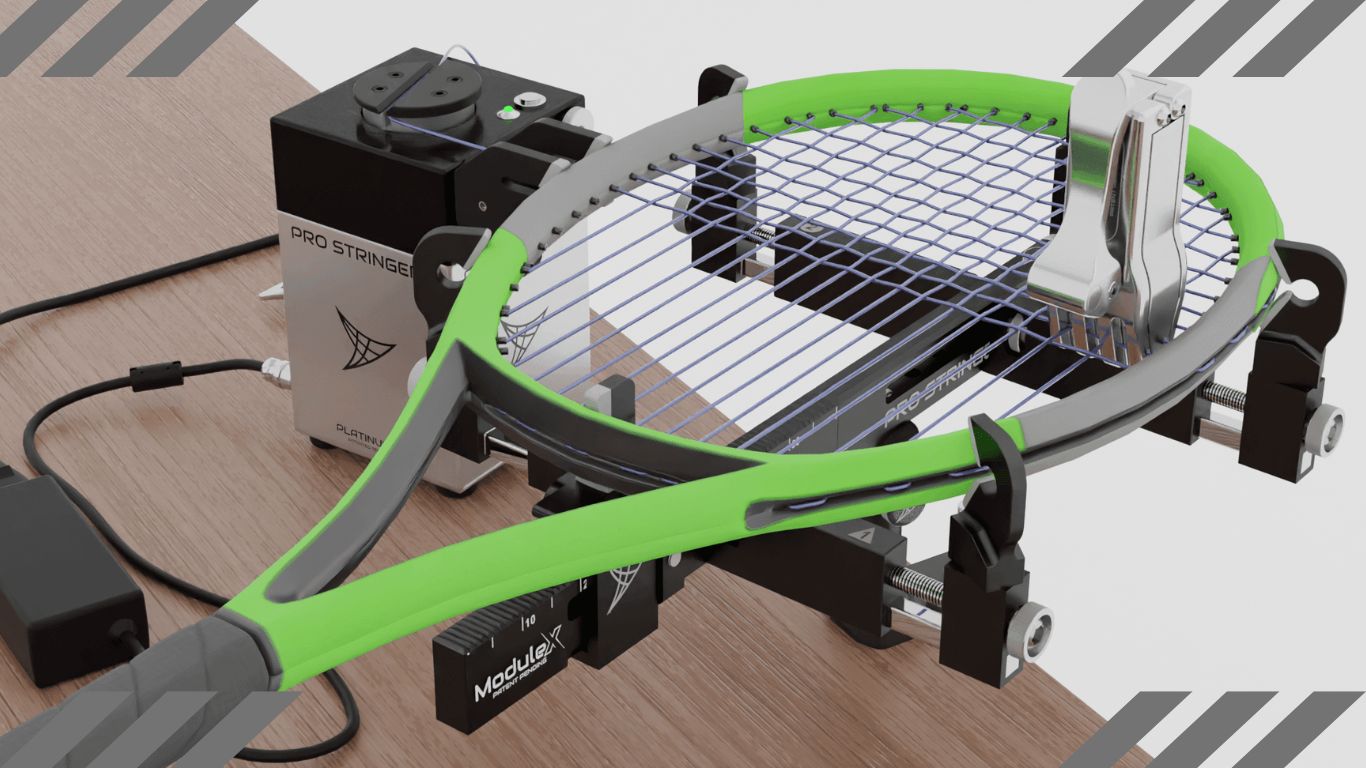
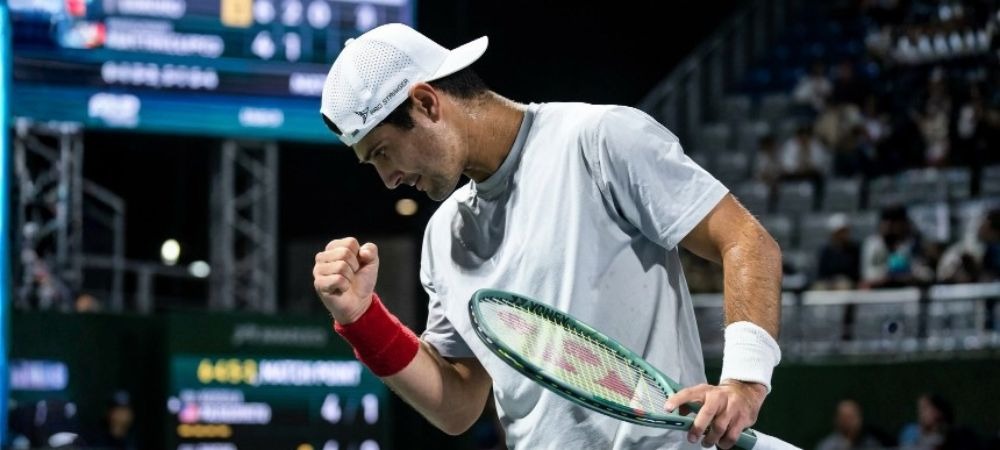
This level of precision is something Rubin Statham understands firsthand. As an ATP professional tennis player, former #1 New Zealand Davis Cup Player, and founder of Pro Stringer, Rubin experienced the challenges of inconsistent restringing throughout years of professional competition. During his time on tour, he and his twin brother spent over $17,000 on restringing labor in a single year, while inconsistent stringing methods affected performance week after week. This experience led him to develop Pro Stringer, assembling a global engineering team from the United States, Korea, Australia, and South Africa to create a portable, accurate, and affordable electronic tennis racquet stringing machine designed for players who demand consistency anywhere in the world.
This attention to detail explains why many serious players invest in their own tennis racquet stringing machine. Having direct control over tension allows players to maintain reliable performance instead of depending on inconsistent shop setups.
The Importance of Precision During Stringing
Tension accuracy is only part of the equation. The quality of the stringing process also affects performance.
Experienced stringers focus on:
- Clamp pressure
- Pull consistency
- Knot technique
- Frame stability
Professional tools help maintain precision throughout the process.
One essential tool many stringers rely on is a starting clamp. This small but highly valuable accessory helps secure strings during difficult pulls and improves consistency when working with certain patterns or hybrid setups.
Attention to detail during stringing directly impacts how the racquet performs on court.
The Role of Stringing Technique
Even identical tensions can feel different depending on the stringing technique used.
Factors include:
- Pull speed
- Knot placement
- Machine calibration
- Mounting stability
Professional stringers use specialized tools to protect both the racquet and strings during installation.
A stringing awl is commonly used to guide blocked holes and help maneuver strings cleanly through tight grommet spaces without damaging the frame or material.
Proper technique ensures that the intended tension translates accurately onto the court.
Recommended Tension Ranges by Player Type
Beginners
Recommended range:
48–54 lbs
Focus:
- Comfort
- Forgiveness
- Easy power
Intermediate Players
Recommended range:
52–57 lbs
Focus:
- Balanced performance
- Moderate control
- Spin development
Many players searching for the best tennis strings for intermediate player development choose hybrid or multifilament setups because they provide a strong balance of comfort, spin, durability, and control without feeling overly stiff.
Advanced Players
Recommended range:
55–62 lbs
Focus:
- Precision
- Consistency
- Aggressive shot control
These are only starting points. Personal preference always matters most.
Tennis String Tension Chart
The following tennis string tension chart provides a simple starting point based on player level, playing style, and string type. While personal preference always matters, this tennis strings chart can help players narrow down a suitable setup faster.
| Player Type | Recommended Tension | Common String Types | Main Focus |
| Beginner | 48–54 lbs | Multifilament / Synthetic Gut | Comfort and easy power |
| Intermediate Player | 52–57 lbs | Hybrid / Multifilament | Balanced control and spin |
| Advanced Baseliner | 55–62 lbs | Polyester | Precision and aggressive control |
| Serve-and-Volley Player | 50–56 lbs | Natural Gut / Hybrid | Touch and feel |
| Junior Players | 45–52 lbs | Multifilament | Arm comfort and forgiveness |
This tennis string tension chart should only be treated as a starting reference. Small adjustments of 2–3 lbs can completely change racquet feel and performance.
Tennis String Gauge Explained
Many players focus only on tension while ignoring another important factor: string gauge. Understanding tennis string gauge, explained simply, means understanding string thickness.
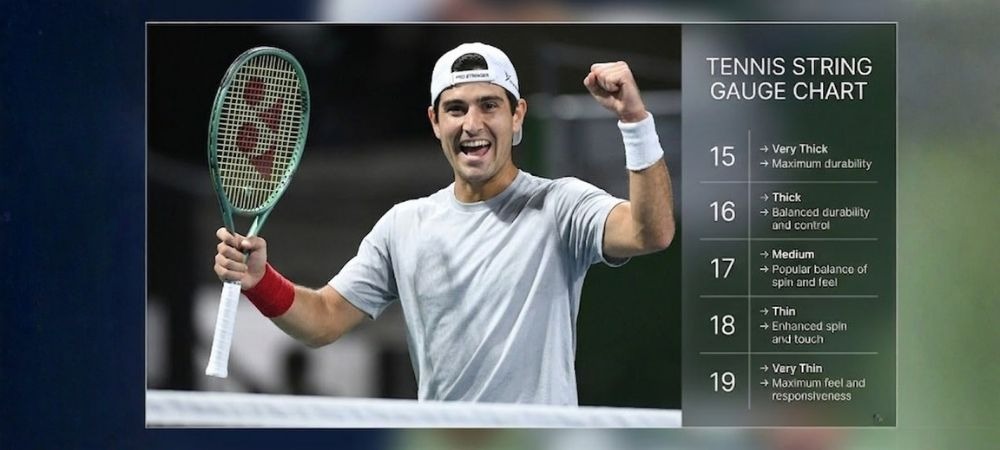
Tennis string gauge usually ranges from 15 to 19:
- Lower gauge numbers = thicker strings
- Higher gauge numbers = thinner strings
Thicker strings generally offer:
- Better durability
- More control
- Longer lifespan
Thinner strings usually provide:
- More spin potential
- Better feel
- Increased ball pocketing
Tennis String Gauge Chart
| Gauge | Thickness | Performance Characteristics |
| 15 | Very Thick | Maximum durability |
| 16 | Thick | Balanced durability and control |
| 17 | Medium | Popular balance of spin and feel |
| 18 | Thin | Enhanced spin and touch |
| 19 | Very Thin | Maximum feel and responsiveness |
Players using heavy topspin often prefer thinner gauges for added bite on the ball, while frequent string breakers may benefit from thicker options.
Signs Your Tension May Be Wrong
Your Tension May Be Too Low If:
- Balls fly long constantly
- Control feels inconsistent
- Strings move excessively
- Volleys feel unstable
Your Tension May Be Too High If:
- Shots lack depth
- Arm discomfort develops
- Power feels difficult to generate
- Sweet spot feels unforgiving
Pay attention to recurring patterns during matches and practice sessions.
Building Confidence Through Consistency
The right string tension does more than improve mechanics. It also builds trust in your equipment.
When your racquet responds predictably:
- You swing more confidently
- Decision-making improves
- Shot execution becomes smoother
Confidence often separates good performances from great ones.
A reliable setup allows players to focus on tactics and movement instead of constantly adjusting to unpredictable ball response.
Final Thoughts
Choosing the right tennis string tension is one of the most important decisions any player can make. Tension influences nearly every aspect of performance, from power and control to comfort and confidence.
There is no universal setting that works for everyone. The ideal setup depends on your technique, playing style, physical condition, and personal preferences. The key is to experiment thoughtfully, make gradual adjustments, and pay attention to how your racquet responds under real match conditions.
As your game develops, your tension preferences may evolve as well. Competitive players constantly refine their setups to maximize consistency and performance.
Tired of paying for restringing jobs that never feel exactly the same from one shop visit to the next? Take direct control of your string tension, consistency, and racquet performance with portable professional-grade stringing machines and tools from Pro Stringer. Built from Rubin Statham’s experience competing on the professional tour and struggling with inconsistent string jobs across different tournaments, Pro Stringer helps players achieve reliable, repeatable tension accuracy whether they are training at home, traveling for events, or preparing for competition.
FAQs
1. What is the best tennis string tension for beginners?
Beginners usually benefit from lower to mid-range tensions between 48–54 lbs. This range offers more power, comfort, and forgiveness, making it easier to develop consistent strokes.
2. Does lower string tension create more spin?
Lower tension can increase ball pocketing, which may help some players generate more spin. However, spin also depends heavily on swing speed, string type, and technique.
3. How often should I restring my tennis racquet?
A common guideline is to restring your racquet as many times per year as you play each week. Competitive players may need restringing much more frequently to maintain consistent performance.
4. What happens if my string tension is too high?
Excessively high tension can reduce power, shrink the sweet spot, and increase arm discomfort. Many players also find tighter strings less forgiving on off-center shots.
5. Do professional tennis players change string tension often?
Yes. Professional players frequently adjust string tension based on court surface, weather conditions, ball type, and opponent playing style to maintain optimal control and consistency.